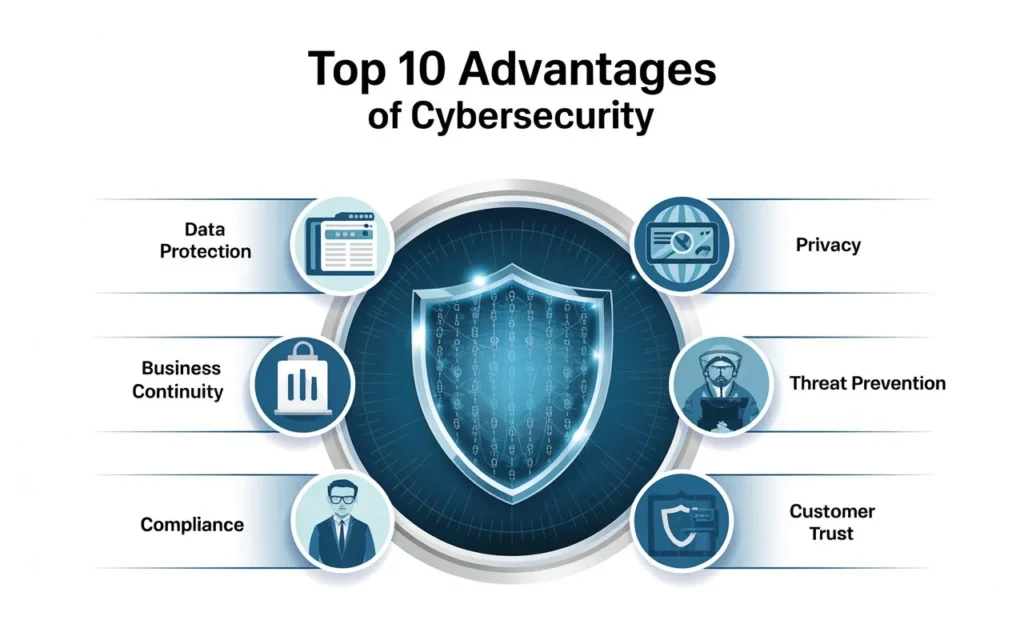
Top 10 Advantages of Cybersecurity
Cyber threats are becoming more sophisticated and damaging than ever before. From ransomware attacks and phishing scams to insider threats and data breaches, organizations face increasing challenges in protecting their digital assets. Unfortunately, many businesses realize the impact of cyberattacks only after it’s too late. A single breach can disrupt operations and lead to data theft. It can also damage your brand reputation and cause significant financial losses. These incidents not only expose sensitive information but also weaken customer trust and business credibility.At Sk Technology, we understand the importance of staying one step ahead of evolving cyber risks. Our cybersecurity solutionsare specially designed to protect, detect, and respond to potential threats before they cause harm. Our services integrate high-end threat intelligence, data protection policies and well-planned recovery steps to ensure that your business is secure, compliant and resilient. With an effective cybersecurity structure, organizations will be assured to protect their systems, achieve uninterrupted services, and long-term growth.
Below are the 10 key advantages of cybersecurity that highlight its vital role in protecting your organization and supporting long-term growth.
1. Protection Against Cyber Threats
Defending against viruses, malware, ransomware, phishing, and other Internet attacks is the most obvious advantage of cybersecurity. An effective cybersecurity system will protect your networks and systems against unauthorized access and will secure your critical information against hackers.
2. Safeguarding Sensitive Data
Organizations store massive amounts of confidential data including customer information, financial records, intellectual property, and more. Cybersecurity provides the safety of this information against breach, theft, and manipulation, safeguarding both the company and its clients.
3. Enhanced Business Continuity
A cyberattack can cripple operations and cause downtime. Backups, firewalls, and disaster recovery are the most effective methods of cybersecurity and enable organizations to resume business and recover fast even after an attack.
4. Improved Customer Trust
Customers today value privacy and data protection more than ever. When a business demonstrates strong cybersecurity practices, it earns trust and loyalty. Customers feel safe when they know that their personal data is not compromised, which makes them feel comfortable interacting with your brand.
5. Regulatory Compliance
Many industries such as finance, healthcare, and e-commerce are governed by strict data protection regulations (like GDPR, HIPAA, or PCI DSS).An effective cybersecurity system helps to adhere to these regulations to prevent fines and loss of reputation.
6. Protection Against Financial Loss
The financial impact of cyberattacks can be devastating including ransom money, cost of data recovery, lawsuits, and income loss. Cybersecurity reduces such risks through breach prevention and threat detection at an early stage before they turn into expensive wildfires.
7. Increased Productivity
Viruses and malware can slow down networks, corrupt files, and disrupt operations. Through well-developed cybersecurity systems, workers are able to operate without delays leading to increased productivity and smooth organizational performance.
8. Secure Remote Work Environment
As remote and hybrid work models continue to grow, employees access corporate networks from various devices and locations. Cybersecurity tools like VPNs, multi-factor authentication, and endpoint protection help maintain security outside traditional office boundaries.
9. Recovery of the System
Strong cybersecurity includes well-prepared recovery plans for attacks or system failures. This means regularly backing up critical data and systems. They should also possess plans that would help them resume operations swiftly in case of an incident. These recovery plans are routinely tested to ensure effectiveness. Fast recovery helps reduce downtime and limit financial losses after an incident.
10. Handles Data Management
Cybersecurity plays a key role in effective data management by ensuring information is securely organized and stored. It often involves classifying data according to its sensitivity and applying the right level of protection. This strategy boosts security as well as helps in making smarter decisions and efficient operations.
CONCLUSION
Cybersecurity does not only imply protection, but resilience, trust, and business development. With the appropriate cybersecurity solutions, your organization will be able to mitigate attacks before they happen, respond quicker to attacks and ensure the trust of your clients and partners.We help businesses build stronger defenses through advanced cybersecurity solutions that protect what matters most to your business such as your data, systems, and your reputation.