Sktechnology
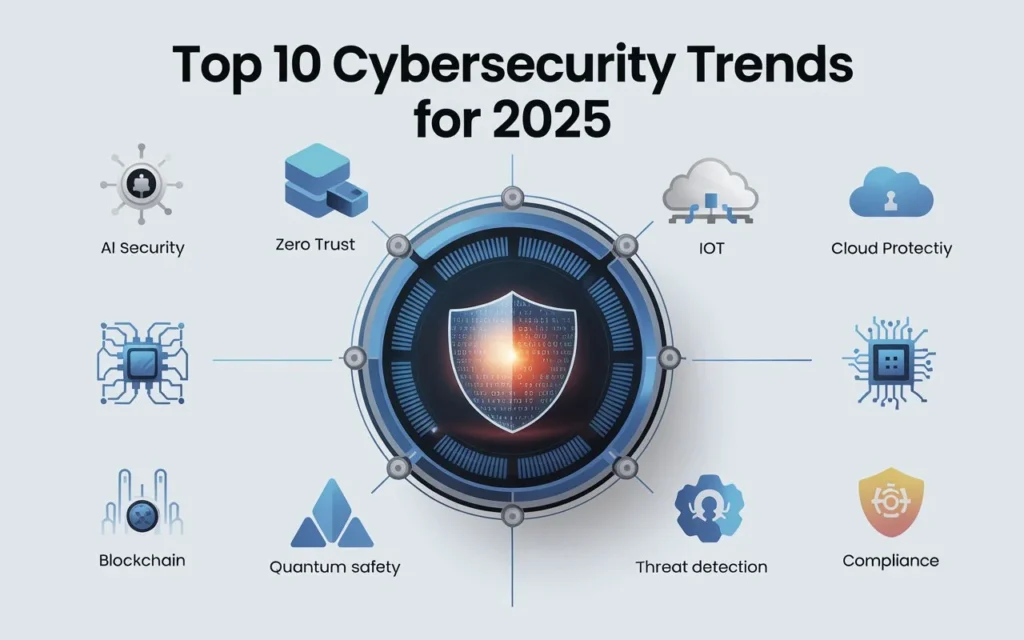
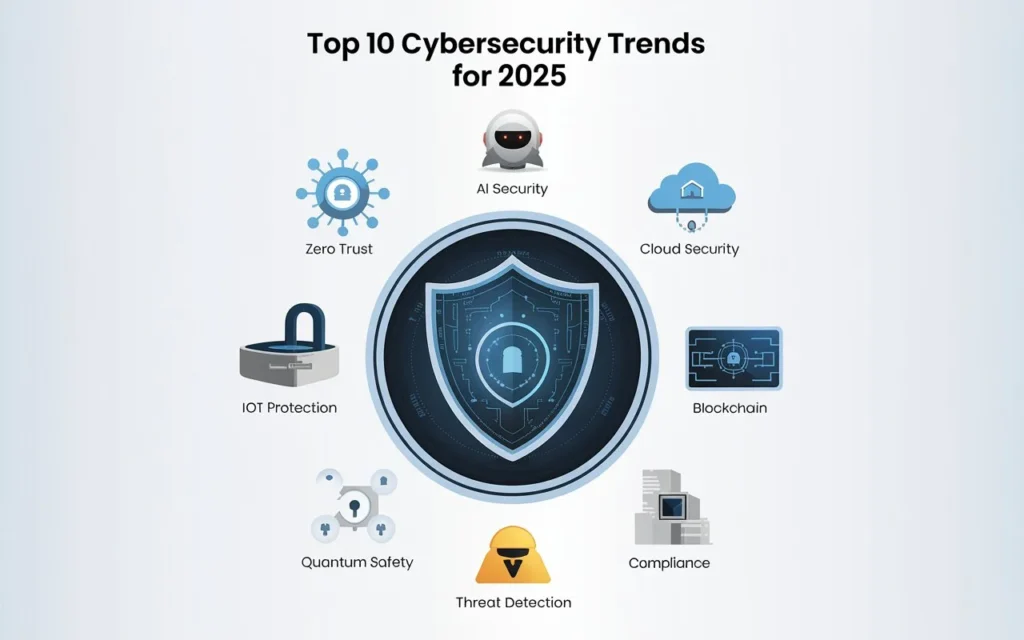
Explore top 10 Cyber Security Trends For 2025

Explore top 10 Cyber Security Trends For 2025

In 2025, the digital landscape is more connected than ever, and the risks are equally increasing. Organizations are adopting cloud, AI, and remote work more than ever. Attacker are also upgrading their tactics to take advantage. Understanding the cyber security trends for 2025 is critical to stay resilient. The emergence of new technologies demands new methods of data safety and security . Here are the 10 cybersecurity trends for 2025 you need to know,

1. The Rise of AI-Powered Cyber Attacks

Artificial intelligence (AI) is transforming the cybersecurity landscape. It is also giving cybercriminals powerful new tools to launch attacks. Now hackers use AI to make advanced phishing attempts, to create adaptive malware, and to produce convincing deepfakes that will fool even a trained expert. This makes conventional defense mechanisms inadequate. Companies need to implement AI-based security systems that are capable of identifying and suppressing these intelligent attacks in real time.

2. Zero Trust as the Standard Security Model

The principle of “never trust, always verify” is becoming the default approach to cybersecurity. Zero Trust security means that not a single user or device, whether within or outside the network, will be trusted automatically. Rather, each access request should be checked constantly. More organizations are migrating to Zero Trust architectures in 2025 to reduce insider threats and malicious access and ensure that sensitive data is maintained securely across all levels.

3. Cloud Security as a Top Priority

As companies continue to migrate to the cloud for scalability and flexibility. Cloud security is now a primary concern. Misconfigurations, weak identity management, and lack of visibility are among the biggest risks. Cyber attackers are exploiting these weaknesses to infiltrate organizations. Businesses are now investing in cloud-native security tools and stronger authentication practices. They are also adopting comprehensive cloud governance frameworks to stay secure.

4. Increasing Threat of Supply Chain Attacks
Hackers have discovered that the easiest route into a large organization is frequently provided by a smaller and less-safe third-party vendor. Supply chain breaches are on the rise, producing attacks on software vendors, logistics and other external partners. To ensure they are not vulnerable indirectly, businesses are focusing more on assessing vendor risks, ongoing monitoring, and compliance requirements in 2025.
How Can You Secure Your Future in 2025?

5. Growing Risks around IoT and OT Devices

The Internet of Things (IoT) and Operational Technology (OT) are expanding rapidly, from smart home devices to industrial systems. Unfortunately, many of these devices are not built with security in mind, making them attractive entry points for hackers. To prevent the exploitation of these vulnerabilities, organizations are more likely to segment the IoT networks, update the device firmware frequently, and monitor traffic behavior to identify anomalies.

6. Evolution of Ransomware into Double Extortion

Ransomware continues to be one of the most damaging forms of cybercrime, but it has evolved. Hackers are no longer satisfied with simply encrypting files. They now starting steal sensitive data and threaten to leak it unless additional payments are made. This aspect of ransomware attacks is even more devastating since organizations can experience both downtime in their operations and reputational loss, this is called double extortion strategy. Regular backups, robust encryption, and incident response planning are essential for defense.

7. Remote Work Demands Data Protection

The shift to remote and hybrid work models continues in 2025, expanding the boundaries of organizational networks. Employees now access business systems from multiple devices and locations. It can increase the risk of unauthorized access and data leaks. The new work environment demands enhanced security measures such as encrypted communications, secure VPNs, endpoint protection and round-the-clock monitoring.  Companies that fail to secure their remote workforce leave themselves vulnerable to costly breaches and compliance issues.

8. Multi-Factor Authentication Becomes Essential

Passwords alone are no longer reliable in this digital threat world. Multi-factor authentication (MFA) has become a norm, and clients must identify themselves using several authentication techniques, including biometrics, one-time-codes, or mobile authentication application. In 2025, MFA is not just a recommended practice but a necessity for protecting accounts, sensitive data, and business-critical applications. Organizations that adopt MFA significantly reduce the chances of credential theft and unauthorized access.

9. Deepfakes and AI-Driven Social Engineering

Cybercriminals are increasingly using artificial intelligence to generate convincing deepfakes, fake voices, and video impersonations designed to trick employees and customers. These AI-driven scams can lead to fraud, financial theft, or unauthorized access to sensitive systems. In 2025, Organizations need to increase their staff awareness campaigns, introduce a system of checking financial transactions, and apply AI detection devices to detect distorted media.The fight between attackers and defenders in the AI space is growing, caution is vital

10. Cyber Resilience as the End Goal

Cybersecurity is no longer just about preventing attacks. It is about resilience. Organizations are focusing on how quickly they can detect, respond to, and recover from incidents. Cyber resilience involves combining strong defenses with business continuity planning. This ensure that even in the event of a successful attack, operations can continue with minimal disruption. Companies that embrace resilience strategies are better equipped to maintain customer trust and protect long-term business growth.
Cloud Security as a Top Priority

How Can You Secure Your Future in 2025?

The cybersecurity landscape is evolving at lightning speed, and organizations can no longer rely on outdated defenses. To stay protected, businesses must adopt a proactive approach that blends advanced technology with strategic resilience. This means investing in strong identity management, securing cloud environments, leveraging AI-driven protection, staying compliant with global regulations, and building a culture of awareness among employees. Taking these steps ensures that your business is not only secure today but also prepared for tomorrow’s threats.
At Sk technology, we help organizations turn these strategies into reality. Our cybersecurity services are designed to protect your digital assets, strengthen compliance, and provide 24/7 monitoring against evolving threats.  We deliver end-to-end solutions tailored to your needs.
Leave a Comment

Your email address will not be published. Required fields are marked *